Yesterday they were babbling. Today they're naming colors. Tomorrow they're negotiating. The toddler year is the most extraordinary cognitive leap of human life — and we're built to catch every bit of it.
Tour the Toddler room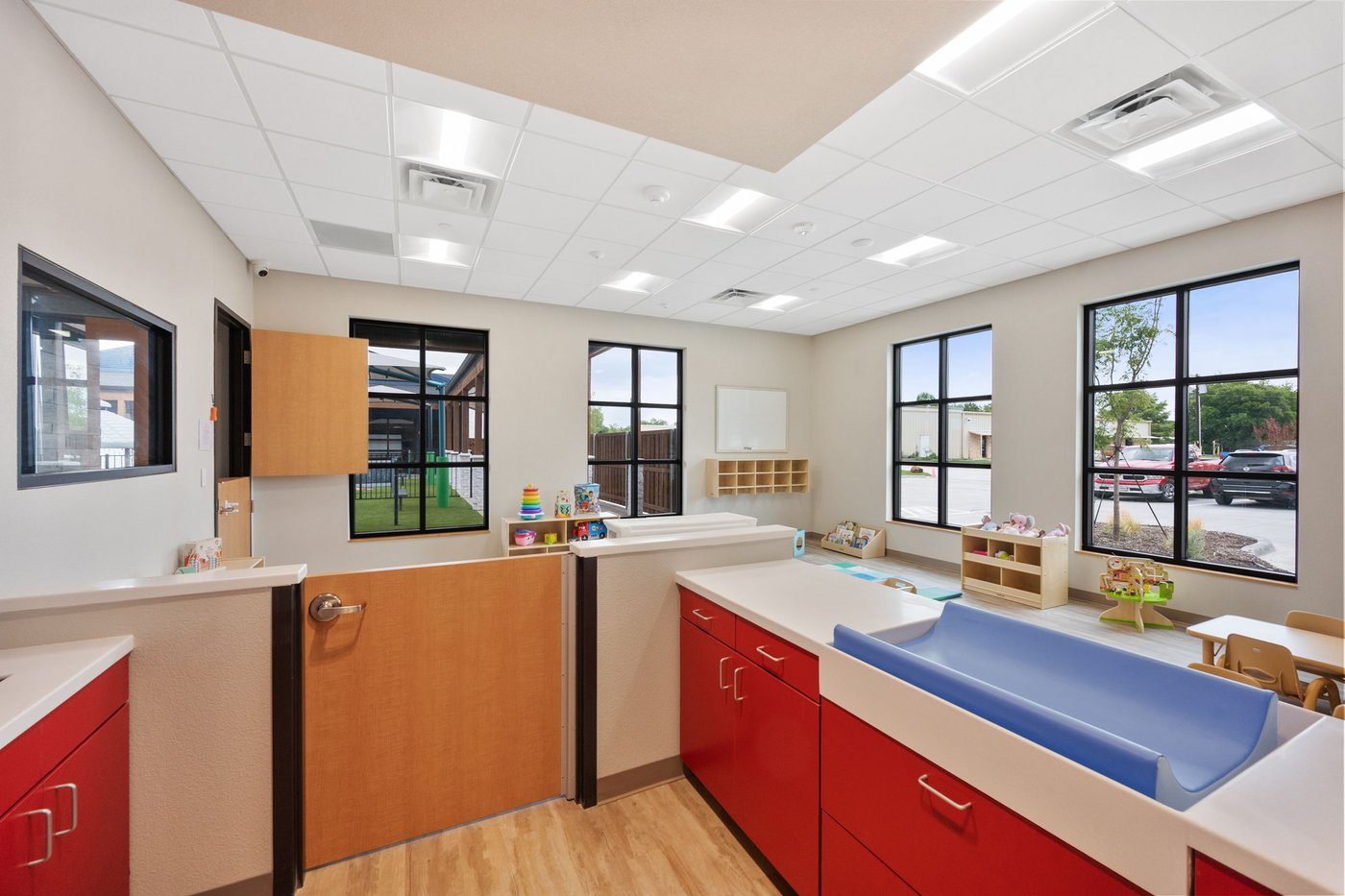
Toddlers need both. We give them predictable bookends — meals, naps, transitions — with open exploration time inside them.
Breakfast for early arrivals, table activities, hugs, books. We meet each toddler where they are emotionally that morning.
Songs, fingerplays, hello to each friend, weather, the day's theme. Frog Street Toddler curriculum — gentle, joyful, language-rich.
Blocks, books, dramatic play, sensory bins, art. Toddlers rotate or choose. The room is intentionally set up so they can.
Toddler playground — separate from older kids. Climbers sized for them, soft surfaces, shade, water in summer.
Hot meals served at child-sized tables. Teachers eat with them. We talk through it: "What color is your carrot?"
Full nap on individual cots. Soft music, dim lights, lovey from home. We do not wake sleeping toddlers.
Wake-up snack, then read-alouds. Picture books, predictable text, lots of "what's that?" pointing.
Dance parties, gross motor activities, more outdoor time if weather allows. Toddlers need to MOVE.
Free-choice play, daily Brightwheel updates sent home, gentle goodbye routine.
More neural connections form between 12 and 24 months than at any other time of life. Our job is to feed that fire with the right kinds of input.
The single biggest focus. Constant narration, songs, books, conversation. We talk WITH them, not at them.
Sharing is hard. Big feelings are huge. We coach through every moment so they leave with real tools.
Walking turns to running. Climbing turns to jumping. We give them safe space to push limits.
Crayons, paintbrushes, puzzle pieces, small toys. Building the hand strength they'll write with later.
When you're ready, we're ready. We match your home approach exactly — consistency is what works.
Simple, joyful stories of kindness, sharing, gratitude. Opt-in, family-driven.
Every toddler is different. These are the markers we love watching unfold.
Texas minimum is 1:9 for toddlers. Ours is 1:5 — meaningful difference when half the kids might be in meltdowns at any given moment. We have enough hands to actually help.
Watch our toddlers in action. You'll be amazed at how much they're learning — and how much fun they're having doing it.
Schedule a Tour